

Blog Post
Achieving a Hardware-Agnostic User Experience with VAULT
Network architecture has traditionally bound the end-user experience directly to the on-site hardware. When an Internet Service Provider or Managed Service Provider (xSP), or property owner, selects a specific wireless access point or gateway manufacturer, they may, at worst, inherit that manufacturer’s native user interface, login portals, and management tools. At best, they are restricted by them. This dependency creates a fragmented user experience and significant operational rigidity for providers.
VAULT fundamentally alters this dynamic by decoupling the user experience from the underlying network infrastructure. By operating as a hardware-agnostic SaaS layer, VAULT ensures that the interface the user interacts with remains consistent, regardless of which manufacturer built the routers or access points operating behind the scenes.
This post examines the technical architecture behind this decoupling, the limitations of hardware-tied portals, and the strategic advantages VAULT offers to xSPs seeking flexibility and consistency in their deployments.
The Limitations of Hardware-Specific Portals
To understand the solution, we must first define the problem inherent in traditional network deployments. Hardware manufacturers prioritize the performance of their radios, switching capacity, throughput, and management interface. While many provide captive portals and end-interfaces, these software components are typically tied strictly to their specific ecosystem.
Inconsistent User Interfaces
When a Managed Service Provider (MSP) utilizes “Manufacturer A” for one property and “Manufacturer B” for another, the user experience can differ radically. For a resident or user moving between these locations, the experience is disjointed. They are forced to learn new systems simply because the hardware in the wiring closet has changed. That’s to say nothing of the operational headaches for support teams, which often must interact with those interfaces to handle first-line support.
Operational Vendor Lock-In
Relying on the hardware manufacturer’s native portal creates a rigid form of vendor lock-in. If an xSP wishes to switch hardware vendors, perhaps due to supply chain shortages, price hikes, or technical failures, they face a significant barrier. Anyone who was in the industry through 2020 and into 2022 experienced this firsthand. Switching hardware necessitates ripping out the user-facing software layer as well. This migration forces users to re-register devices, change passwords, and navigate unfamiliar interfaces, leading to frustration and an increase in support ticket volume.
VAULT’s Decoupled Architecture
VAULT solves these challenges by abstracting the user experience layer away from the physical equipment. It functions as an overlay that interacts with the network hardware via API or RADIUS integration, rather than relying on the hardware’s embedded portal software.
This architecture means the “device manufacturer” becomes a commoditized element of the stack. Whether the network runs on RUCKUS, Cambium, Cisco, Alta Labs, or TP-Link, among others, VAULT’s platform presents the same interface to the end user and support teams.
The Abstraction Layer Mechanics
Technically, VAULT sits between the user’s device and the network access server. This separation of concerns ensures that the User Experience (UX) is defined by software logic, not silicon limitations. When a user connects to the Wi-Fi network:
Strategic Benefits for Service Providers
For xSPs and network operators, the ability to maintain a consistent UX across a heterogeneous hardware environment provides distinct strategic advantages.
Supply Chain Resilience
The hardware market is volatile. Component shortages can render a specific manufacturer’s inventory unavailable for months. If an xSP’s user experience is tied to a specific manufacturer’s portal, they cannot easily substitute alternative hardware without disrupting their customer base.
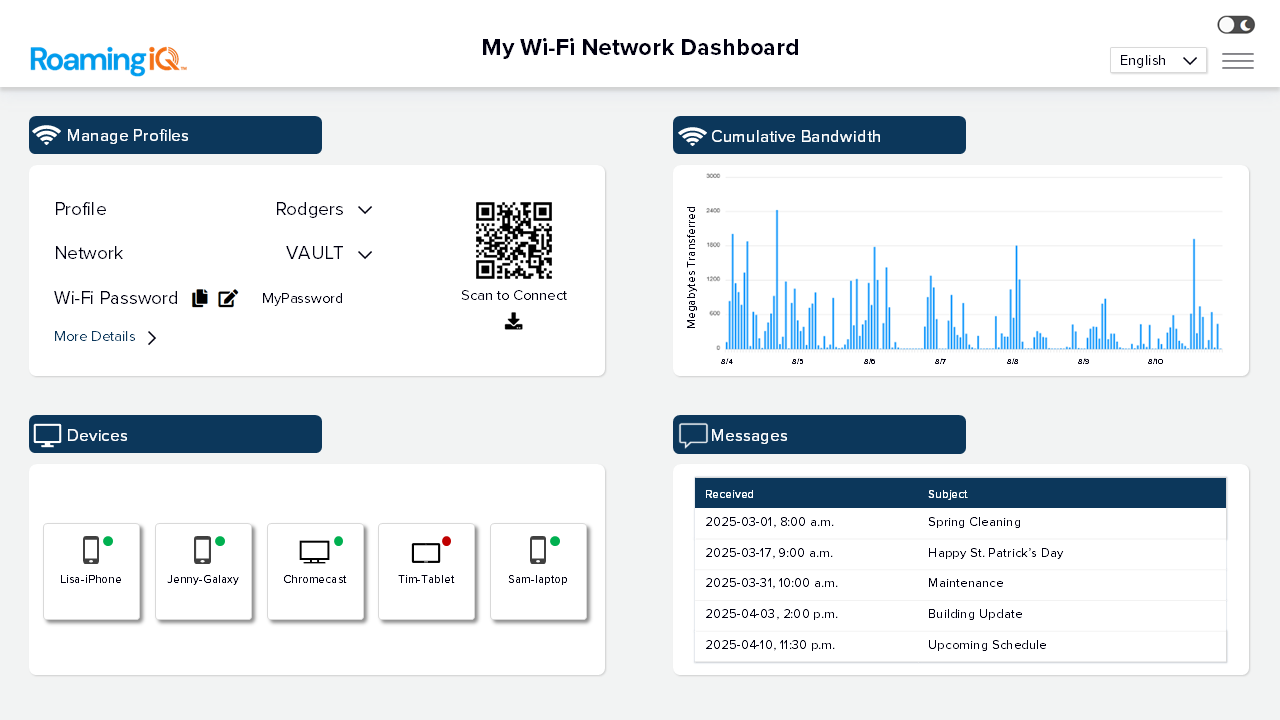
With VAULT, an xSP can deploy “Manufacturer A” at property one and “Manufacturer B” at property two based on current availability or pricing. Because VAULT manages the onboarding and authentication, the residents in both buildings see the same login screen, use the same dashboard to manage their devices, and follow the same support documentation. The xSP gains the flexibility to shop for the best hardware for individual deployments without fear of fragmenting their service delivery.
Unified Support and Documentation
Technical support represents a major cost center for xSPs. When UX varies by hardware, front-line support teams must maintain different documentation and troubleshooting scripts for every hardware vendor in the field. A support agent must first identify which hardware-dependent user experience is installed at a property before they can guide a user through a password reset or device addition.
VAULT standardizes this process. Because the interface is identical across all properties, front-line support teams only need to learn one system. Documentation becomes universal. “How to add a gaming console” instructions remain valid whether the underlying network is powered by enterprise-grade RUCKUS gear or cost-effective TP-Link units. This standardization drastically reduces training time for support staff and lowers average handling time (AHT) for support calls.
Consistent Branding and Ownership
Hardware manufacturer portals often prioritize their own branding or offer limited customization options. This dilutes the xSP’s brand presence. VAULT allows the xSP or property owner to fully white-label the experience. The user interacts with the service provider’s brand, not the equipment manufacturer’s logo. This consistency reinforces brand loyalty and establishes the xSP as the provider of the experience, rather than just a utility pipe.
The User Perspective: Seamless Connectivity
For the end user, the network’s technical complexities should be invisible. They prioritize connectivity and ease of use. VAULT’s hardware-agnostic approach delivers on this expectation by stabilizing the digital environment.
The “Personal Area Network” Concept
VAULT creates a secure, managed experience that follows the user. By migrating the Wi-Fi password (PSK) to the cloud, VAULT allows a user’s credentials to work on any VAULT-enabled network.
Consider a scenario where a resident moves from an apartment complex using Alta Labs hardware to a student housing facility using Juniper Mist hardware. In a traditional setup, this move requires a completely new onboarding process. With VAULT, the user’s unique Pre-Shared Key (PSK) remains valid. Their devices connect automatically because the authentication authority, VAULT, remains constant, even though the broadcasting hardware has changed.
xSP Conclusion
The user experience should never be a hostage to hardware selection. By decoupling the interface from the infrastructure, VAULT provides a unified, consistent, and superior experience across diverse device manufacturers. This approach empowers xSPs to navigate supply chain challenges, reduces support complexity, and ensures that users enjoy seamless connectivity regardless of the equipment powering the network.
As the industry moves toward more modular and flexible network architectures, the separation of hardware and user experience is no longer just a convenience; it is a competitive necessity. For xSPs looking to scale efficiently while maintaining high customer satisfaction, implementing a hardware-agnostic layer like VAULT is the logical step forward.