
Blog Post
The Strategic Fallacy of the “One-Stop-Shop” OSS/BSS
In the telecommunications and software industries, there is a persistent allure to the “all-in-one” solution. You’ve heard it; the “single pane of glass,” or “one throat to choke.” For Internet Service Providers and Managed Service Providers (xSPs), this often manifests as a monolithic Operations Support System (OSS) and Business Support System (BSS) platform. These vendors promise a single dashboard that handles everything: billing, dispatch, network monitoring, customer support, and user experience.
While this consolidation appears efficient on a sales brochure, it often creates significant operational debt in practice. VAULT is deliberately engineered not to be a one-source OSS/BSS solution. We advocate for a modular, “best-of-breed” architecture that empowers organizations to select the optimal tool for each specific function.
This post examines the risks inherent in the monolithic software model and explains why decoupling your User Experience (UX) layer from your operational backend is a critical strategy for long-term agility.
The Risks of Monolithic Coupling
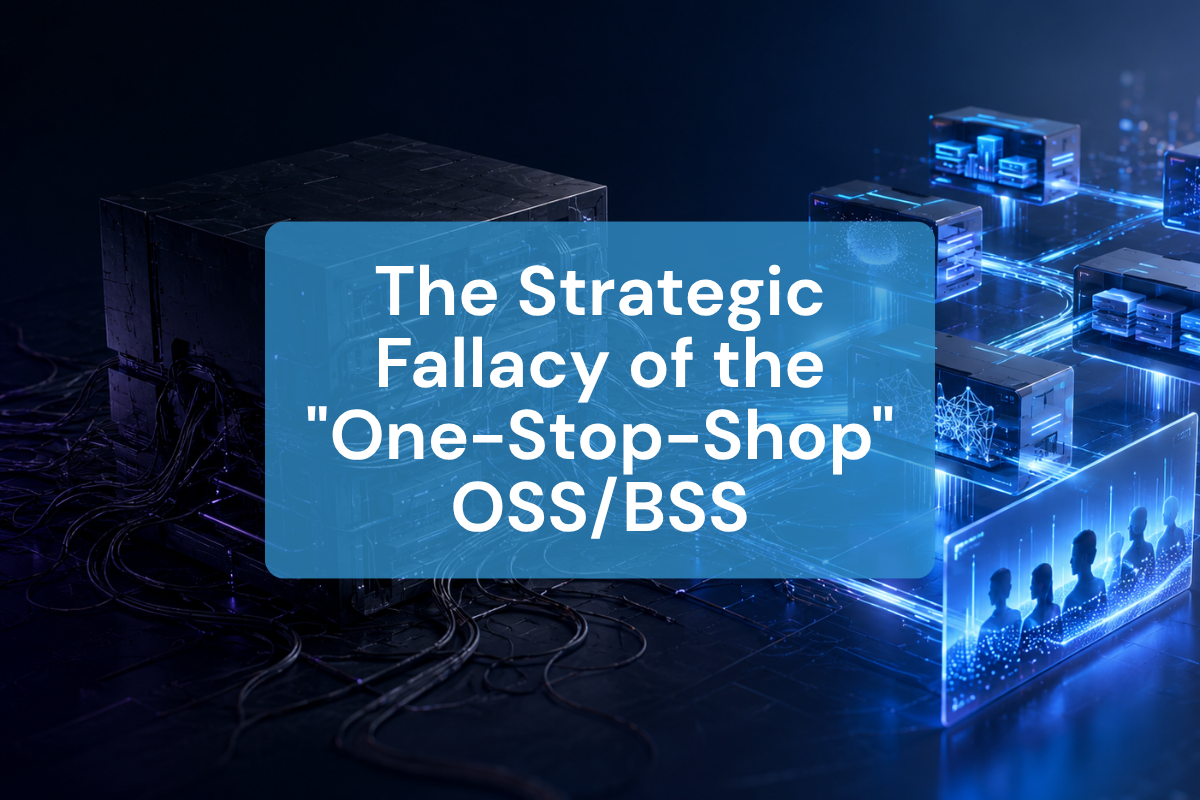
A monolithic OSS/BSS bundles disparate business functions into a single codebase. In this environment, your truck roll scheduling software is inextricably linked to your resident-facing captive portal. Your accounting ledger is tied to your network provisioning engine.
This tight coupling introduces two primary risks: functional mediocrity and vendor lock-in.
The “Jack of All Trades” Problem
It is rare for a single software vendor to be the market leader in every category. A company that excels at building complex billing ledgers may not have the expertise to design intuitive, high-conversion user interfaces.
When an XSP commits to a one-stop-shop provider, they are typically buying a suite where one or two modules are excellent, and the rest are merely adequate. You might get a fantastic dispatch tool, but you are forced to use a clunky, outdated user portal by settling for the bundled solution, you compromise the performance of critical business units.
The Trap of Vendor Lock-In
The more critical business functions you migrate onto a single platform, the harder it is to leave. If your dispatch, billing, and UX are all controlled by one vendor, you lose leverage.
Consider a scenario where your accounting team becomes frustrated with the limitations of the bundled billing module. In a best-of-breed architecture, you could simply migrate to a new billing platform like Stripe or Zuora while keeping your network operations unchanged. In a monolithic model, changing your accounting software would require ripping out your entire network management and dispatch system as well. The switching costs become prohibitively high, effectively trapping the business in a suboptimal ecosystem.
VAULT’s Philosophy: The Modular Stack
VAULT operates on the principle of modularity. We focus exclusively on what we do best: the User Experience and identity management layer. We are not a back-office accounting system, and we are not a fleet management tool. Instead, we are the intelligent interface that connects your users to your network, while integrating seamlessly with the other specialized tools in your stack. This approach offers distinct strategic advantages for modern xSPs.
Departmental Autonomy
A modular stack respects the unique needs of different departments. Your operations team needs the best possible software for scheduling truck rolls and managing technicians. Your finance team needs the most robust compliance and invoicing tools available. Your marketing and product teams need a user interface that drives engagement and sales. VAULT allows each department to select the “best-of-breed” solution for their domain.
- 1
Operations: Choose the dispatch software that optimizes your specific routing needs.
- 2
Finance: Select the ERP or billing gateway that matches your regulatory environment.
- 3Product: Use VAULT to deliver premium, white-labeled user experience that drives ARPU and retention.
VAULT acts as the connective tissue, using APIs to push and pull data between these systems without enforcing a rigid dependency.
Operational Agility and Futureproofing
The technology landscape changes rapidly. New billing regulations emerge; new field service technologies are developed. A modular architecture allows an XSP to upgrade individual components of their stack without disrupting the whole.
If a revolutionary new dispatching AI enters the market, a VAULT-enabled XSP can adopt it immediately. If integration with VAULT is desired, it can simply integrate via API. An XSP using a monolithic OSS/BSS would be forced to wait—potentially for years – until their single vendor decides to build a similar feature into their suite.
The User Experience Layer Must Be Independent
Perhaps the most critical argument for decoupling is the sanctity of the User Experience. The interface your customers interact with should never be held hostage by backend operational tools.
In a bundled solution, if the truck roll software goes down for maintenance, or if the billing module throws an error, it can often impact the customer-facing portal. By separating the UX layer with VAULT, you ensure that the resident’s digital experience remains stable and consistent, regardless of what is happening in the back office.
Conclusion
The “one-stop-shop” OSS/BSS is a relic of an era where software integration was difficult and expensive. In today’s API-driven economy, integration is standard. There is no longer a technical justification for locking your entire business into a single vendor’s walled garden.
VAULT empowers XSPs to build a technology stack that is resilient, flexible, and high-performing. We provide the industry’s best user experience layer, and we leave the accounting to the accountants and the dispatching to the logistics experts. This clean separation of responsibility is not just good software architecture; it is good business strategy.
Ready to learn more about VAULT? Contact our team to schedule a demo.